Women Are Investing in Feeling Like Themselves: The Rise of Longevity-Led Beauty Treatments
Alice Hartwell
Experts weigh in on a shift towards services that don’t aim to “fix”.
For decades, the beauty industry has sold a simple promise, and at times, a not-so-subtle warning: smooth the lines, eradicate the imperfections, and make looking younger the absolute goal. The message has taken different forms across cultures and generations, but the underlying narrative has remained remarkably consistent: never settle for what you have; there is always something to improve. And more often than not, that pressure has been directed squarely at women.
Female beauty standards are, in many senses, both unattainable and ever-shifting—a cycle that, arguably, fuels the industry itself. After all, a business driven by improvement could hardly thrive if women felt entirely comfortable in their own skin. Yet recently, there have been signs of a gentle shift. Increasingly, women appear to be stepping away from so-called “corrective” treatments and instead embracing a more radical form of acceptance. One rooted in feeling good about what’s already there. The goal is no longer transformation, but preservation: an investment in oneself, for oneself. It’s a form of self-honouring that goes beyond aesthetics, and beyond the expectations of the male gaze.
To examine this shift, I spoke to two industry experts to better understand how women are increasingly investing in longevity-led beauty treatments, moving away from a culture of “quick fixes.” What’s emerging instead is a different kind of beauty regimen: one that can be enjoyed without the tired label of “female vanity.” In many ways, these rituals are becoming something far more meaningful.

Traditionally, investment aesthetics have been framed around correction; a cycle of “elimination” and “replacement” that can feel harsh both in sentiment and, often, in outcome. The focus has long been on removing perceived flaws or replacing what time has taken away, yet these approaches don’t always deliver the lasting results patients hope for. Today, however, practitioners say attitudes are changing.
“Consumers are now wanting to invest in things that actually work, whether that’s a cream or a treatment,” says beauty editor and facialist Fani Mari. “I see women choosing treatments that deliver long-term results, generally avoiding gimmicks. They’re focusing on skin longevity and ageing well, yet naturally. Treatments such as resurfacing lasers, microneedling, and acid peels are particularly effective. Science-backed treatments go a long way and tend to be safer too.”
A sentiment echoed by fellow practitioner Justine Masters, or as London’s beauty set know her, The Alternative Facialist. “Investment treatments are no longer about walking out looking dramatically different,” she explains. “An investment now means keeping your skin strong, balanced and supported so it ages beautifully over time.”
“Women are becoming more informed than ever, and less interested in harsh, quick-fix procedures”
There is a growing shift towards prioritising skin longevity and overall skin health; embracing what we already have and focusing on protecting and nurturing it, both for aesthetic and emotional benefit. It’s an approach that feels more intentional than reactive, favouring thoughtful maintenance over the promise of dramatic procedures later down the line.
The endgame now, it seems, is to look and feel more like ourselves over time. According to Mari, this desire for authenticity is influencing even the most traditional cosmetic procedures. “There is a real shift towards natural results, even with facelifts,” she says. “People generally want to recognise themselves in the mirror, even after an invasive procedure.”
So what is the leaning-in du jour, and what’s proving most effective when it comes to preservation? Right now, all roads lead back to one central concept: barrier repair.
After years of aggressively treating the skin, often in pursuit of quick results, the focus is shifting toward restoring and protecting its natural function. “The movement towards barrier repair has come after years of ‘abusing’ our skin with drying products,” explains Mari. “Whether that’s peel-off masks, strong acids or face cleansers that leave your skin ‘squeaky clean’. We’ve also seen an increase in the use of anti-ageing actives like retinoids, which can tend to dry out the skin.”
Rather than abandoning these ingredients entirely, the new approach is about balance. “Retinoids pair well with barrier repair products,” she adds. “I would recommend a barrier repair cream even if your barrier isn’t damaged, as it protects and supports the skin through weather changes and hormonal shifts too.”
Masters is equally passionate about barrier repair, making it a priority for anyone who walks through her door. “If the skin barrier isn’t healthy, everything becomes reactive,” she explains. “A strong barrier is what allows advanced treatments to work properly and safely. Skin becomes calmer, more resilient and heals faster. When barrier health is only addressed occasionally, you tend to see flare-ups and inconsistency. It’s those daily habits that really count.”
There is also a growing sense that women are feeling more empowered by beauty treatments than ever before. Rather than being viewed as an inevitability of ageing, or a “must” to remain relevant, skincare and aesthetic routines are increasingly becoming something to be enjoyed. For many, they represent a way to align more closely with a sense of self: an embrace of both beauty and imperfection within a more realistic, compassionate framework.
Mari agrees, framing skincare as a form of care rather than correction. “I always tell people to take their time when applying their products. Touch their skin, show it love,” she says. “In a way, focusing on preventative care is a way of showing love to your skin, expressing the love you have for yourself. Prevention doesn’t always mean making big changes in your routine; it could be as simple as using sunscreen every day or ditching cleansing wipes.”
Even more invasive treatments are increasingly being framed through a lens of empowerment, with a focus on preservation rather than dramatic alteration. For many women, this shift reinforces a sense of authority and autonomy over their own bodies.
“I think this is an important distinction for women,” says Mari. “The beauty industry is constantly evolving, and now, more than ever, we have the freedom to choose any invasive or non-invasive treatment we like, as long as it’s deemed suitable by our doctor. That choice is empowering. We no longer want to feel bad about the decisions we make, and I think that’s why women are more open about talking about the things they choose to have done.”
For her, the emphasis on preservation is deeply tied to self-respect. “We don’t want to feel confined or judged by patriarchal beauty standards,” she adds.
“Preserving and appreciating what we have now is part of self-care”
So how can you invest in feeling like yourself over the long term, and where does it all start? For Masters, the foundation starts with the basics.
“Focus on maintaining a healthy skin barrier, avoid over-stripping the skin with harsh exfoliants, and use daily SPF without exception,” she says. “Skincare has evolved, and incorporating well-formulated peptides, growth factors, or stem-cell–derived ingredients can support skin communication and resilience when used consistently.”
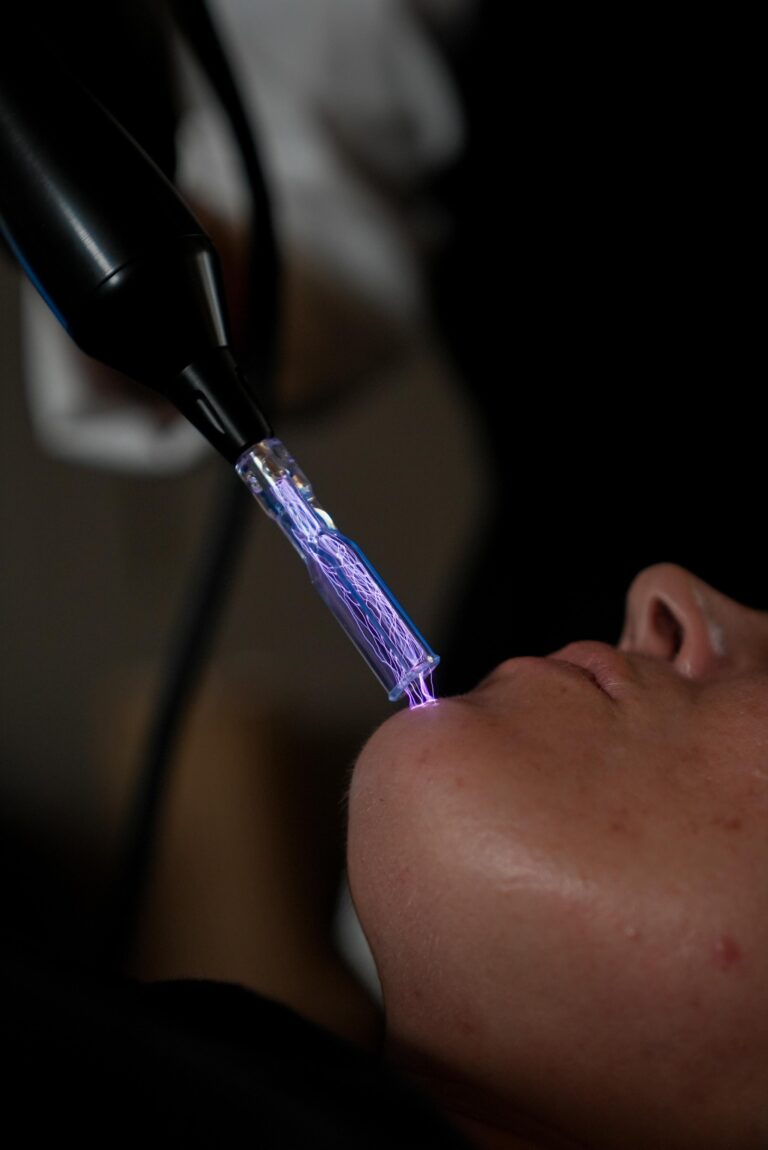
When it comes to treatments, she recommends a gradual, preventative approach rather than reactive correction. “From your late twenties into your early thirties, that’s when I begin introducing gentle collagen-supportive treatments,” she explains. “Not aggressive correction, but subtle stimulation. Things like light microneedling, hyperfusion or regenerative therapies help to keep the skin functioning optimally.”
Ultimately, the philosophy is simple: “The goal isn’t to ‘fix’ anything. It’s to maintain strength so you don’t have to correct later.”
Mari also shares her perspective on navigating today’s increasingly expansive treatment landscape. For her, the most important factor isn’t the treatment itself, but the person behind it.
“My main concern will always be whether someone has found a trustworthy practitioner who focuses on their personal goals and needs, rather than pushing products or treatments they don’t actually need,” she says. “Both as an editor and as a facialist, education is my number one priority; understanding why and how a treatment works, who it’s suitable for, and who should avoid it.”
She adds that in-clinic care should always begin with listening. “During a facial, what’s most important is hearing a client’s concerns, seeing them in person, touching their skin and managing expectations. It’s about creating a treatment plan that genuinely works for them.”
But what about the moments when you aren’t in the treatment room? According to Masters, the real work happens at home.
“Skincare is 80% what you do yourself and 20% advanced treatments with a facialist.”
Both experts agree that when it comes to long-term support at home, LED therapy stands out as one of the most effective tools. “I often recommend a red and blue LED mask,” says Mari. “Red light supports overall skin glow and ageing well, while blue light can help with acne and breakouts.”
She has recently incorporated an LED panel into her own routine; a device stronger than a mask that can be used across the body. “LED has so many benefits, from muscle recovery to supporting better sleep,” she explains. “My main advice when it comes to at-home beauty or wellness tech devices is consistency. That’s what makes the investment worthwhile.”
When choosing a device, she suggests paying attention to the science behind it. “For red LED, make sure the device offers at least a 630nm wavelength. Anything lower simply won’t be effective.”
Masters also recommends supportive tools such as microcurrent devices or very shallow derma rollers, used primarily to enhance product absorption rather than aggressively treat the skin.
Women’s investment in skin health is often dismissed as vanity, with some arguing that continuing to lean into these routines is a reinforcement of the narrative. Mari sees it differently.
“For me, beauty is about care rather than something to fix. That’s where my love for beauty started,” she says. “Even though I’ve had acne since my teens, and still do, I’ve always seen beauty as a refuge; a haven and a way to take care of myself.”
In an ever-changing beauty treatment landscape, where new technologies and approaches seem to emerge almost daily, what do experts predict for the future?
For Masters, the next phase of investment aesthetics will become increasingly personalised and biologically informed. “We’ll see more hormone-aware treatment planning, particularly around perimenopause and stress,” she explains. “There will also be a stronger focus on reducing chronic inflammation rather than simply treating visible symptoms.”
She believes regenerative treatments will continue to evolve, but more subtly and strategically. “Regenerative work will become more refined, with long-term planning replacing reactive fixes. We’re also seeing growing interest in senescent, or ‘zombie’, cells, and how internal support, including targeted peptides, can influence skin health externally.”
Ultimately, she sees the future of aesthetics as deeply holistic. “The future is inside-out, personalised and longevity-focused.”
As a final guiding principle, both experts emphasise the importance of understanding your own skin above all else.
“Get to know your skin and its needs,” says Mari. “Pay attention to how it changes when the weather shifts, when you’re stressed, or when you haven’t slept well. Our skin’s needs are constantly evolving.”
She also encourages a slower, more thoughtful approach to skincare. “Don’t be influenced by viral products that may not work for your skin. Create a core routine and introduce new products gradually rather than changing everything at once. Be patient. No cream works overnight. And always, always wear sunscreen.”
For Masters, the philosophy is equally simple: focus on what supports the skin rather than overwhelming it. “Choose what strengthens your skin, not what stresses it,” she says. “If it supports your skin’s natural function and helps you continue to look like yourself, it’s worth it.”
In the end, it appears that the rise of longevity-led beauty isn’t about changing who we are, but about supporting ourselves; skin, body and mind, so that we can continue to recognise the person looking back at us in the mirror, through every season of life.
Share This Story
Related Posts